
The full catalog
Every system we install
Two whole-home tiers, a dual-tank build for bigger homes, a dedicated well-water system, two drinking-water options and the add-ons. Specs are the real manufacturer numbers — not marketing rounding.
Find your system
Which system does your home need?
Three quick steps. Tell us what you’re seeing and whether you’re on city water or a well, and the card shows the system that fits, and what you can skip.
Watch first
See it explained before you talk to anyone
Four short videos, one per problem. Press play on whichever one sounds like your house — they play right here, nothing to sign up for.
01
Whole Home Systems
Treats every drop entering the house — showers, laundry, dishwasher, ice maker. This is what deals with hardness, scale, chlorine, and iron or sulfur on a well.
 Most homes start here
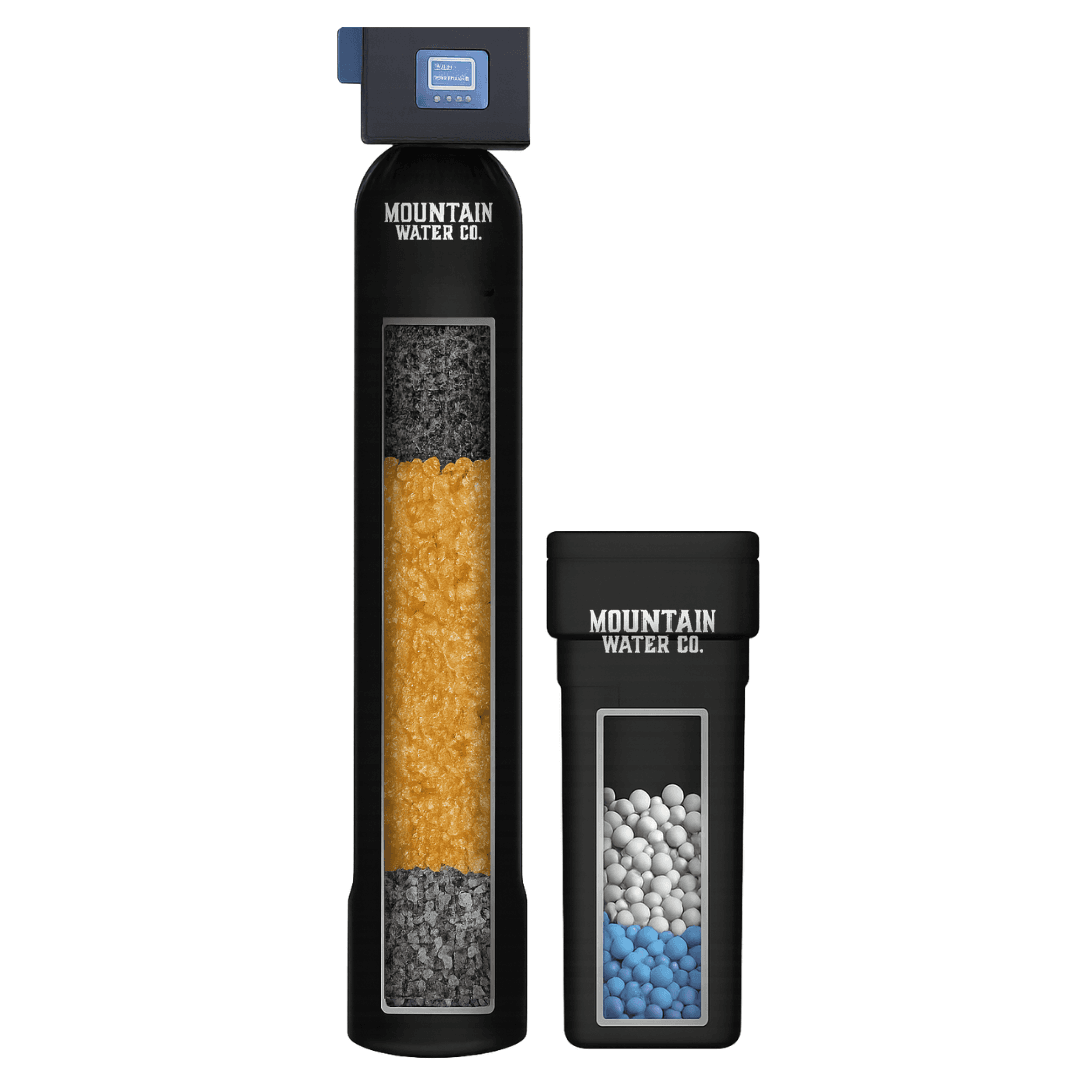
Whole-Home Softener + Filtration
Soft water and chlorine filtration in one tank.
Handles the two things most homes on city water deal with at once: hardness that scales your pipes, your water heater and the inside of your kettle, and the chlorine taste that comes with treated water. One tank, one valve, out of the way.
Details and specs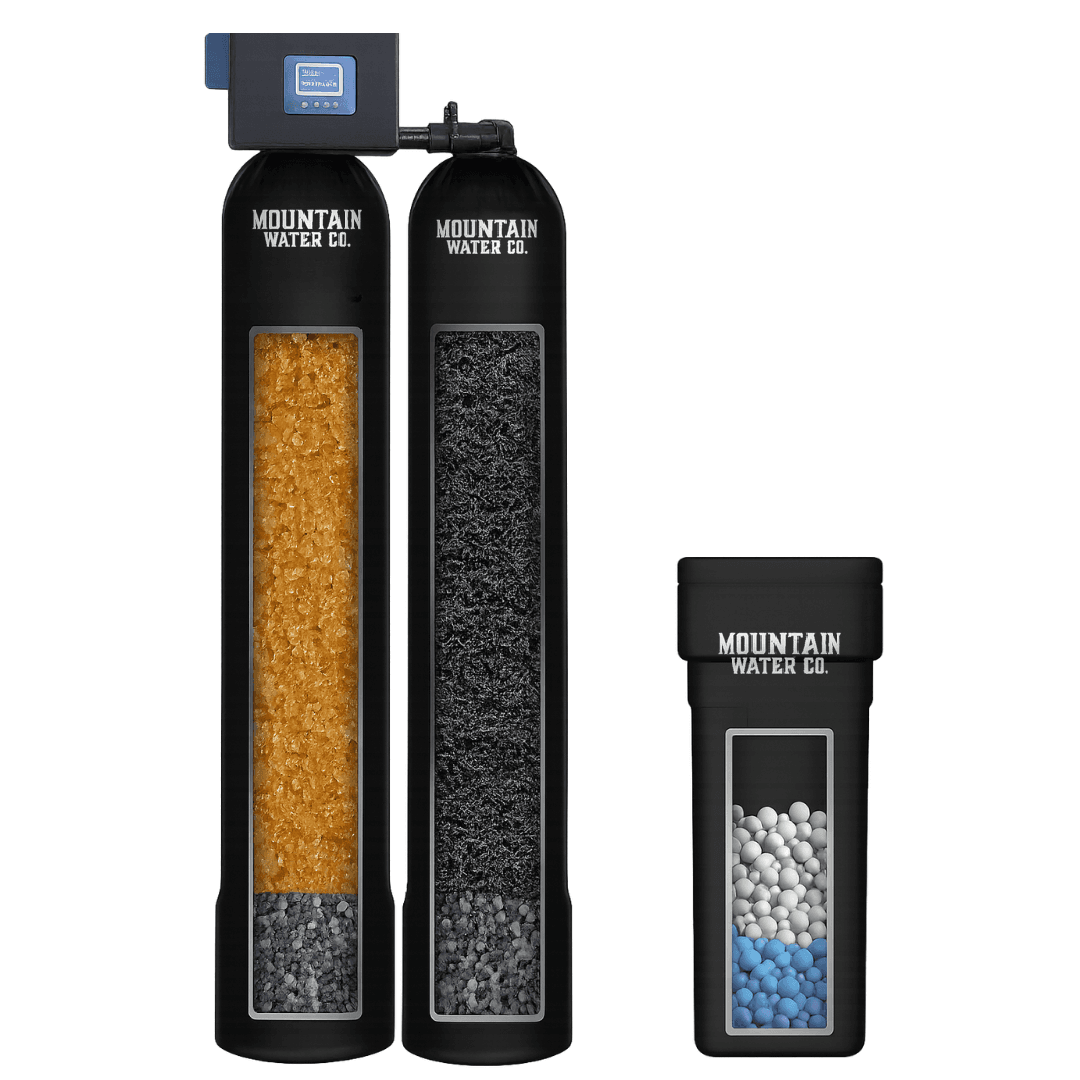
Dual-Tank System — City Water
A softening tank and a carbon tank, each doing one job.
Two tanks instead of one: a dedicated softening tank and a dedicated carbon tank. Splitting the media means each does its job properly instead of competing for room in a single vessel. Worth it on larger houses and on supplies with a strong chlorine taste.
Details and specs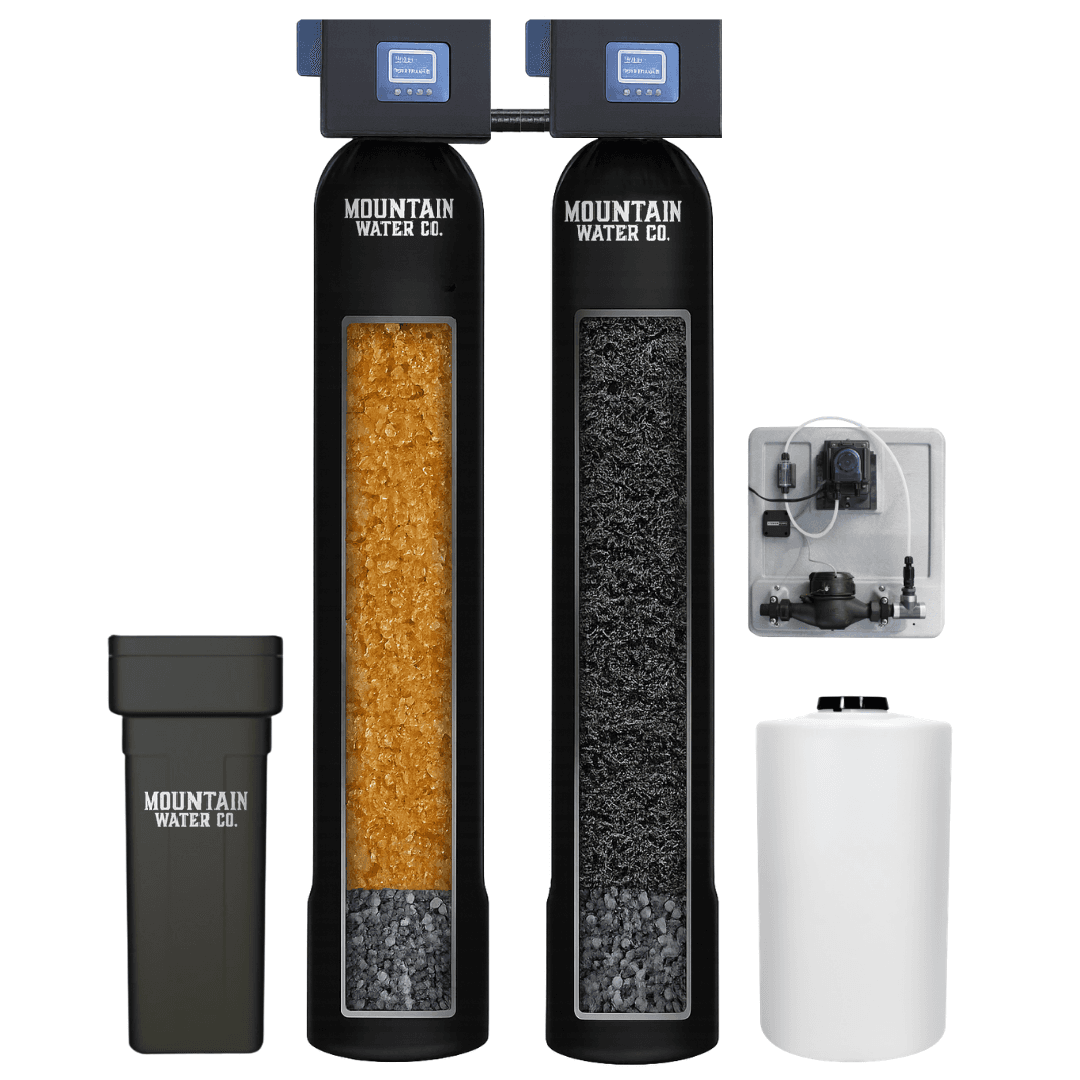 For private wells
Well Water System — Iron, Manganese and Sulfur
A well is a different problem from a town supply.
Orange staining in the bath, a metallic taste, or the rotten-egg smell when you run the hot tap are iron, manganese and hydrogen sulfide — and a water softener on its own is the wrong tool for all three. This pairs a softening tank with a filtration tank that oxidizes and strips them out before the softener ever sees the water.
Details and specs
Salt-Free Conditioner
Scale control without salt — and it is not a softener.
Changes how hardness minerals behave so they do not stick as scale, without removing them. No salt, no drain line, no regeneration. Worth being straight about the trade-off: the water will not feel soft and it will not stop soap scum, because the minerals are still in it. Right for some houses, wrong for others.
Details and specs02
Drinking Water Systems
Reverse osmosis in the kitchen, for the water you actually drink and cook with. Catches what a whole-home system is not built to.
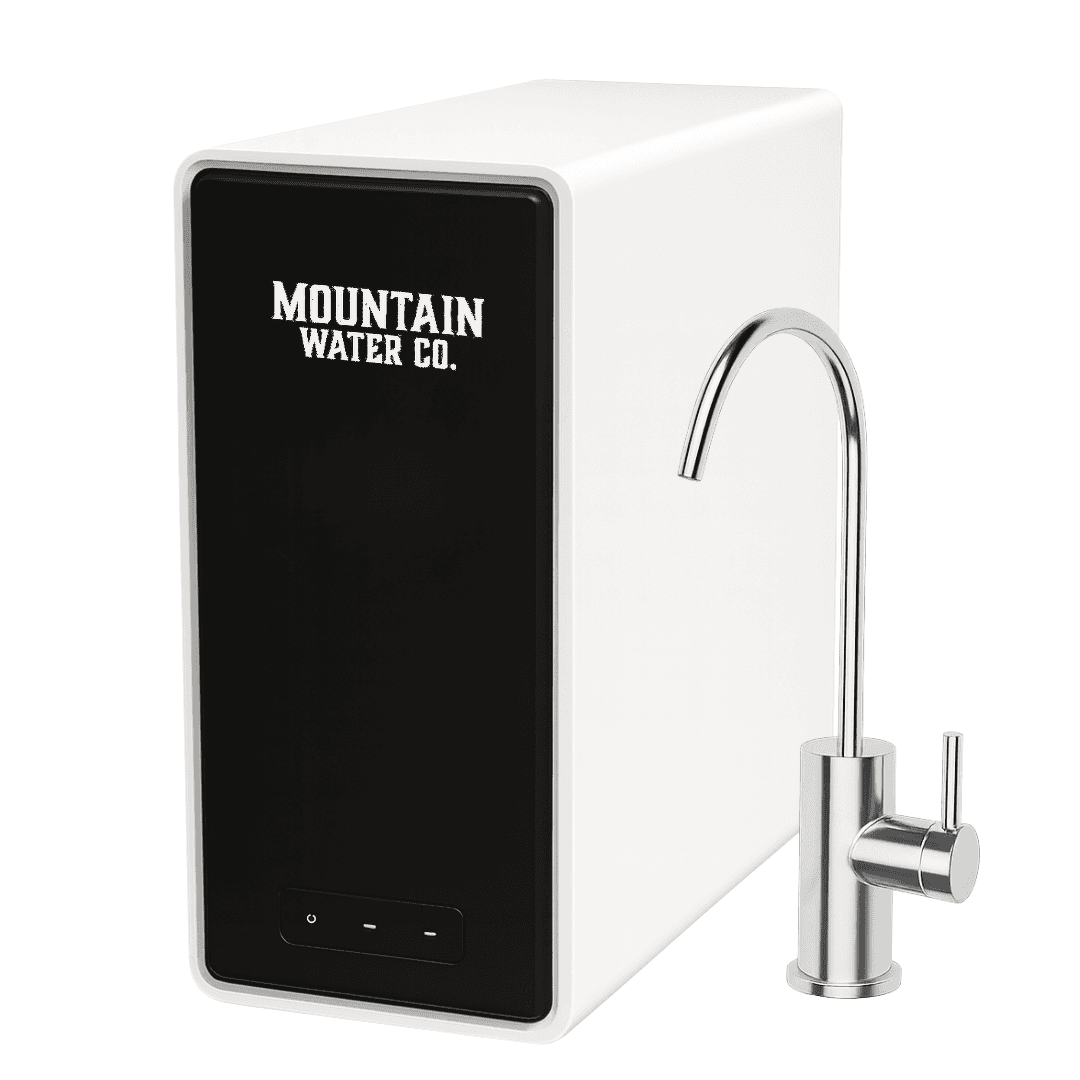
Tankless Reverse Osmosis
Drinking water from its own kitchen faucet, with no storage tank.
Reverse osmosis takes out what a whole-home system is not designed to catch. The tankless build does it without the bulky pressure tank, so it fits in a cupboard that is already full.
Details and specs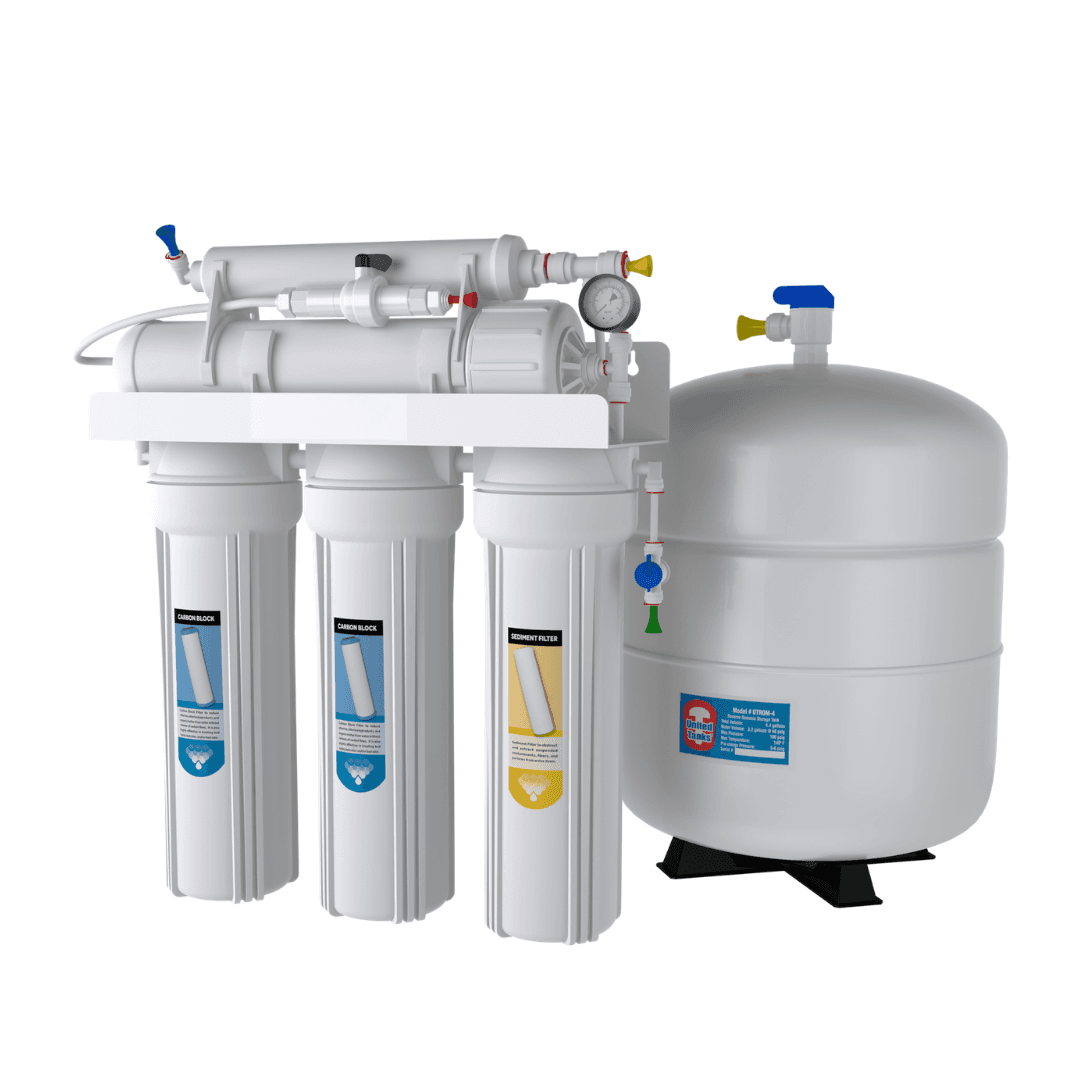
Reverse Osmosis with Storage Tank
The classic under-sink reverse osmosis build.
A multi-stage reverse osmosis system with a pressure tank, feeding its own faucet in the kitchen. The tank means a glass fills at normal speed.
Details and specs03
Add Ons
Extras that solve one specific problem, such as UV disinfection on a well.
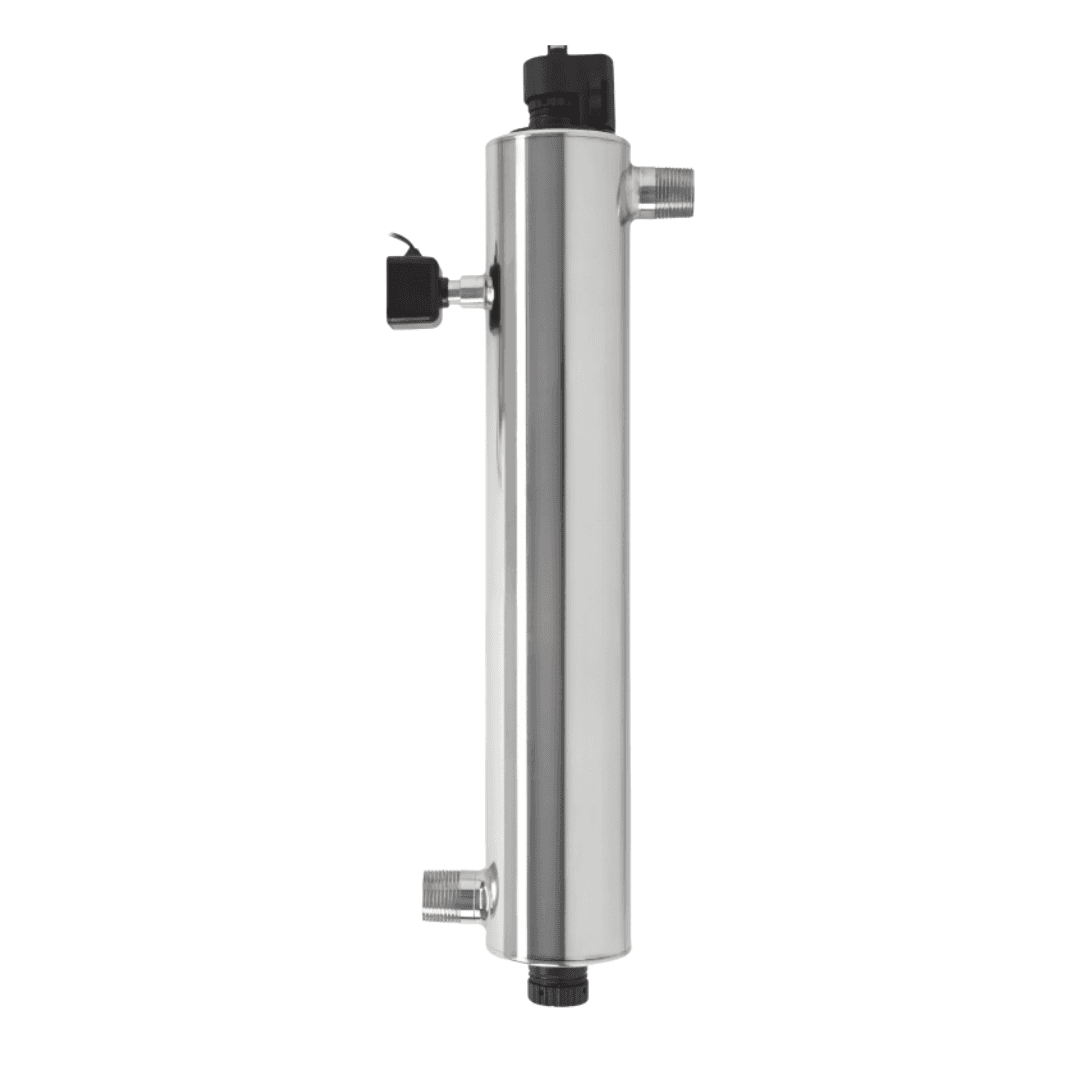
Whole-Home UV
Ultraviolet disinfection, usually for wells.
An ultraviolet lamp the water passes through on its way into the house. It is the standard answer to a well that has tested positive for bacteria. It does nothing for hardness, iron or taste — it is for one job only.
Details and specsSystem info and pricing
Not sure which one you need
That's the normal starting point. Call or fill out the form, tell us what you're seeing and whether you're on city water or a well, and we'll tell you which system fits and what it costs. Sometimes the answer is that you don't need us.
- Call or fill out the form
- City water or private well
- Monongalia, Marion & Harrison